
 EN
EN
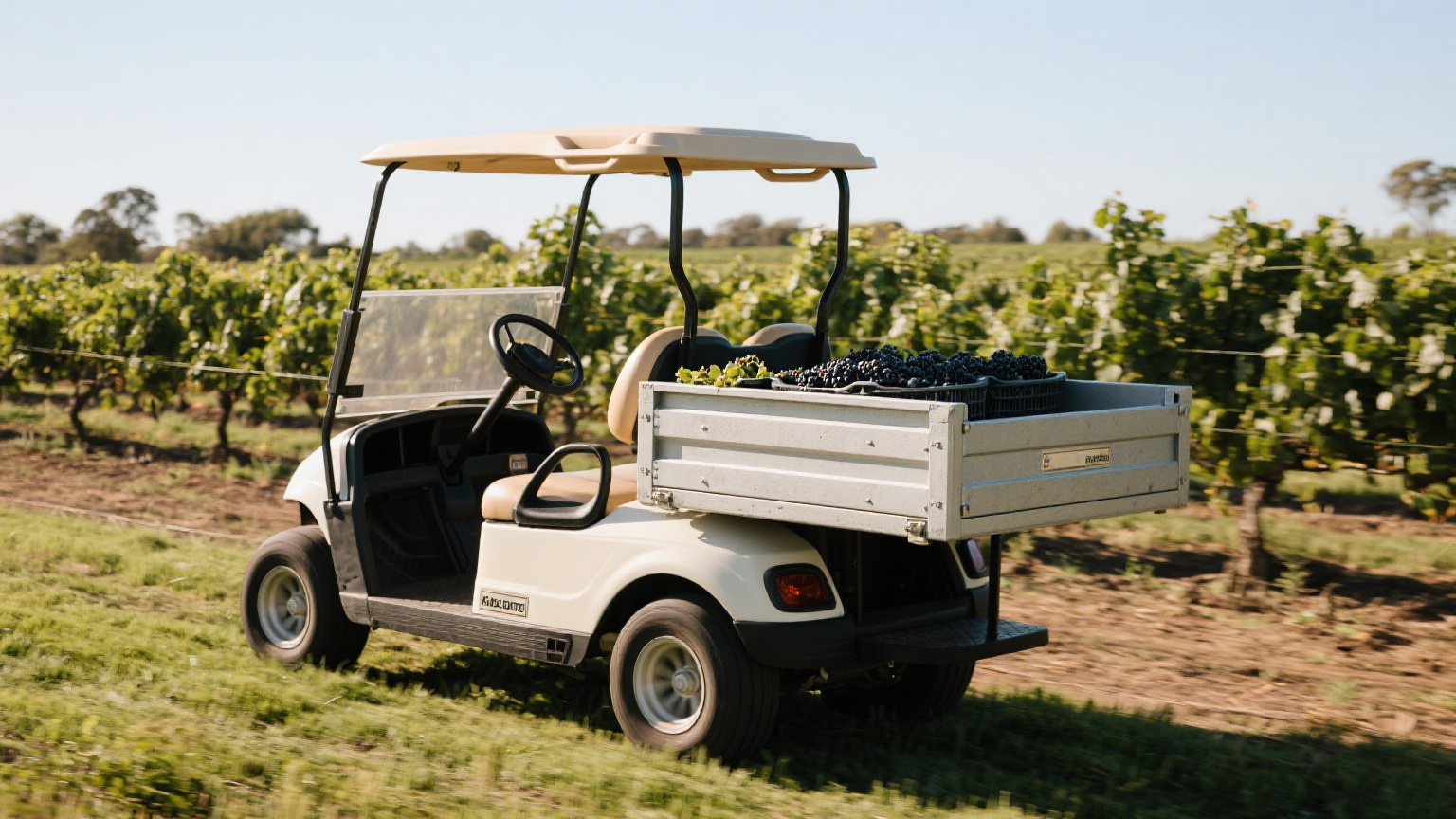
Enhancing Vineyard Efficiency with Utility Golf Carts
Rising Adoption Across Australian Vineyards
Australian vineyards are seeing a shift towards utility golf carts these days. Agricultural reports from 2023 indicate that around 62% of winemakers have adopted them for regular farm work. These small vehicles are taking over from older ATVs and even replacing some manual tasks when moving things around short distances. Especially useful in vineyards where rows are tight, sometimes less than two meters apart. The design strikes a good balance between carrying weight (usually about 500 to 800 kilograms) while not compacting the soil too much. For many growers, this makes sense both practically and environmentally as they navigate tighter spaces without damaging delicate root systems during harvest season.
Improving Operational Efficiency in Daily Workflows
Electric utility carts reduce intra vineyard transit times by 30–50% compared to walking, enabling staff to complete 8–12 additional tasks per shift. Key benefits include:
- Simultaneous transport of pruning tools, harvested grapes, and soil sensors
- Reduced physical fatigue on steep terrain, such as the average 15° slopes found in coastal NSW vineyards
- 20% faster response to irrigation leaks or pest outbreaks
This efficiency gain translates into more responsive vineyard management and improved labor productivity.
Case Study: 40% Reduction in Labor Transit Time at Barossa Valley Vineyard
A 140-acre estate phased out diesel-powered vehicles in 2021, deploying seven electric utility golf carts equipped with 72V lithium batteries. Over three growing seasons, the results were significant:
| Metric | Pre-Implementation | Post-Implementation |
|---|---|---|
| Average worker transit time | 47 mins/day | 28 mins/day |
| Daily fuel costs | $98 | $14 (solar-charged) |
| Harvest bin deliveries/shift | 18 | 29 |
The switch not only cut costs but also enhanced workflow continuity during peak harvest periods.
Supporting Precision Viticulture Through Mechanized Micro-Transport
GPS-enabled utility carts now carry multispectral cameras and soil samplers, increasing real-time data coverage from 60% with manual methods to 95% across vineyard blocks. This advancement improves:
- Irrigation accuracy, boosting water efficiency by 22%
- Disease detection rates, rising from 71% to 89% in 2022 trials
- Fertilizer placement precision, improving from ±35cm manually to ±10cm with GPS guidance
Integrated telemetry systems automatically log route efficiency, allowing managers to adapt travel paths based on seasonal changes in vine density and canopy growth.
Maneuverability and Terrain Adaptability in Challenging Vineyard Layouts
Navigating Narrow Rows and Hilly Terrain with Compact Design
Australian vineyards typically have rows spaced between 1.8 and 2.5 meters apart, so it makes sense why utility golf carts with their smaller 1.2 to 1.5 meter wheelbase fit right in. These little vehicles can turn on a dime without crushing grapevines, and they sit just high enough off the ground (around 10 to 15 centimeters) to handle those inevitable bumps and dips in the terrain. Farmers working in Victoria's densely packed vineyards tell us something interesting too: when navigating those tricky terraced hillsides, they need to make corrections about 85 percent less often than when riding around in regular all terrain vehicles. That kind of difference adds up over time for anyone spending days out in the vines.
Off Road Performance and Suspension Upgrades
These carts can keep going at around 12 to 15 kilometers per hour across gravel paths between rows when harvesting thanks to their heavy duty shocks and strengthened rear axles. Farmers who upgrade their suspensions see real benefits too. Kits that boost travel distance by about 20 to 30 percent cut down on tired backs and sore shoulders, making long days in the field actually bearable. The Australian Viticulture Machinery Survey from last year reported operators experienced roughly 40% less fatigue after installing these upgrades during their full eight hour shifts. For growers working in tough terrain, dual rate coil springs really shine. They handle the rough rocky ground so common in places like the Clare Valley much better than standard setups, which makes all the difference when navigating those challenging fields day after day.
Real World Example: Operating on 25° Slopes in Tasmania's Vineyards
The steep vineyards across Tasmania require special utility carts equipped with hill hold features and four wheel drive systems to get the job done properly. Take Piper's River Estate for instance where they recently switched out their old diesel powered equipment for newer 48 volt electric models packing 800 watt motors. These upgraded machines can tackle those challenging 22 to 25 degree slopes without breaking a sweat even when pulling around 350 kilograms worth of grape harvest bins. That represents roughly double what the older diesel versions managed before. Vineyard workers have noticed a big difference too, completing their work on these inclines about half the time it used to take them, and best of all, nobody has experienced any unwanted rollback situations since making the switch.
Tire Selection and Traction Optimization by Region
What kind of tires we pick really matters when it comes to how well our vehicles perform and how long they last. For those driving on flat areas such as the Barossa Valley region, radial tires filled with air pressure around 18 to maybe even 22 pounds per square inch work pretty well. But things change when heading into places like the Hunter Valley where the soil is mostly clay. There, bigger tires with deeper treads about 1.5 inches deep tend to be much better suited for getting through that kind of ground. Down along the coast of New South Wales, many folks working there opt for special rubber made with silica reinforcement because regular tires just don't hold up against all that salty sea air. These specialized tires can actually last around 200 extra hours before needing replacement compared to what most people typically install. And let's not forget about modular wheel setups either. They're super handy since they make switching from softer tires good for grassy surfaces to tougher ones meant for rougher terrain a breeze without having to carry multiple sets everywhere.
Sustainable Farm Transport Aligned with Eco-Friendly Viticulture
Reducing Carbon Footprint with Electric Utility Golf Carts
Electric utility golf carts reduce vineyard emissions by 43–58% compared to diesel farm vehicles, according to the Clean Energy Regulator (2023). Their quiet operation preserves soil structure during frequent row passes, and regenerative braking recovers 15–20% of energy on downhill runs–particularly valuable in hilly regions like Margaret River.
Solar Charged Fleets: Pilot Success in McLaren Vale
A 12-month trial involving 14 solar-charged carts in McLaren Vale achieved:
- 2.1 tons of CO₂ reduction per hectare annually
- 96% daytime operation coverage via photovoltaic charging
- 58% lower energy costs than grid-charged alternatives
This model now supports over 340 hectares across six partner vineyards, with plans to expand to fully solar-powered fleets by 2026.
Balancing Upfront Investment with Long Term Sustainability Goals
While electric carts require a 35–40% higher initial investment, their average annual maintenance savings of $1,400 result in payback within 3–4 harvest cycles. Victorian vineyards leveraging government sustainability grants have reached 72% fleet electrification with less than 8% annual budget increase for transport infrastructure.
Customization and Practical Applications in Vineyard Operations
Payload Capacity and Matching Carts to Vineyard Load Needs
Modern utility golf carts support payloads of 500–800 kg, enabling single-trip transport of pruning tools, harvest crates, and soil amendments. Vineyard managers in sloped regions like Victoria's Yarra Valley prioritize models with reinforced frames when operating on inclines exceeding 15°.
Custom Attachments: Trailers, Tool Racks, and Harvest Bins
Quick-connect systems allow attachment changes in under 90 seconds–from sprayer-compatible trailers to side-mounted saw racks. A Mornington Peninsula vineyard boosted daily task completion by 33% after adopting modular bins that integrate directly with automated sorting systems.
Modular Upgrades: Sprayer Mounts and Pest Monitoring Systems
Utility carts are increasingly used as mobile platforms for precision agriculture. GPS-guided sprayer mounts reduce chemical overspray by 28% compared to manual application, according to the 2024 Viticulture Tech Review. Integrated infrared pest sensors provide real-time alerts on canopy health, enhancing early intervention capabilities.
Case Study: UV Resistant and Corrosion-Proof Builds in Coastal NSW
A coastal NSW vineyard reduced fleet replacement costs by 40% by switching to marine-grade aluminum carts with UV-stabilized polymer components. These specialized builds withstand salt spray and intense sunlight while maintaining 98% operational availability during peak harvest.
Selecting the Right Model: Site Trials and Expert Recommendations
Operators conduct 14–30 day trials to evaluate:
- Turning radius in sub-2m row spacing
- Battery performance under mixed load/unload cycles
- Compatibility with existing implements
Industry analysts emphasize service network access over minor upfront savings–especially for vineyards located more than 50km from urban centers, where timely repairs are crucial.
Table of Contents
- Enhancing Vineyard Efficiency with Utility Golf Carts
- Improving Operational Efficiency in Daily Workflows
- Maneuverability and Terrain Adaptability in Challenging Vineyard Layouts
- Sustainable Farm Transport Aligned with Eco-Friendly Viticulture
-
Customization and Practical Applications in Vineyard Operations
- Payload Capacity and Matching Carts to Vineyard Load Needs
- Custom Attachments: Trailers, Tool Racks, and Harvest Bins
- Modular Upgrades: Sprayer Mounts and Pest Monitoring Systems
- Case Study: UV Resistant and Corrosion-Proof Builds in Coastal NSW
- Selecting the Right Model: Site Trials and Expert Recommendations