
 EN
EN
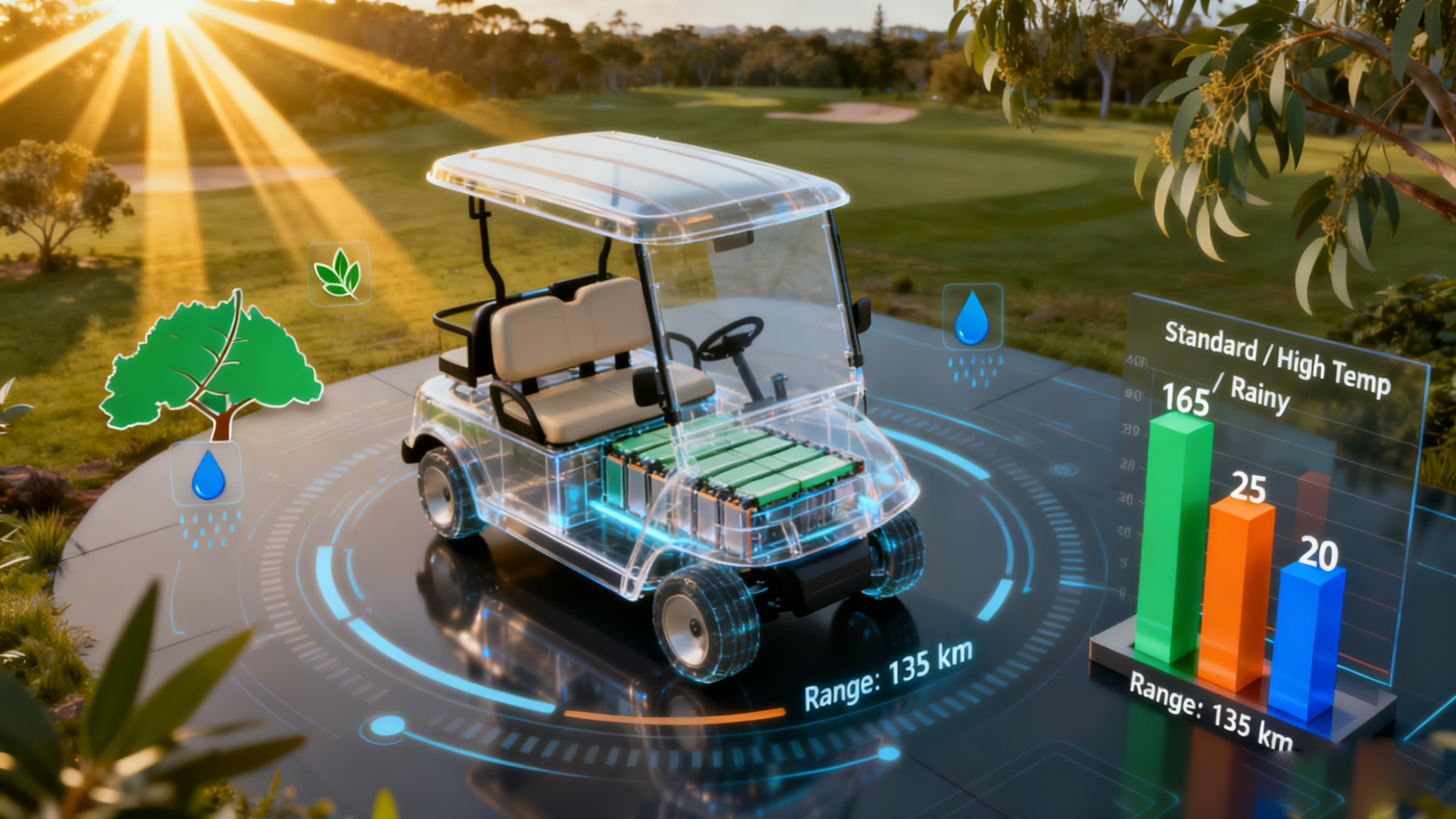
Understanding Golf Cart Battery Lifespan: Types and Typical Performance
What Determines the Average Golf Cart Battery Lifespan?
Four key factors dictate how long golf cart batteries last in Australian conditions:
- Usage patterns: Batteries drained below 50% capacity daily fail 40% faster than those partially discharged
- Maintenance rigor: Unchecked corrosion or low electrolyte levels cause premature capacity loss
- Temperature exposure: Every 8°C rise above 25°C accelerates chemical degradation by 50%
- Charging practices: Partial charging cycles create harmful sulfation in lead-acid batteries
Industry data (2024) shows properly maintained batteries last 2.1x longer than neglected counterparts.
Lifespan Comparison: Lead Acid, AGM, Gel, and Lithium-Ion Batteries
| Battery Type | Typical Lifespan | Cycle Count | Capacity Retention After 3 Years |
|---|---|---|---|
| Flooded Lead-Acid | 3-5 years | 500-800 | 60-70% |
| AGM | 4-7 years | 600-1,000 | 70-75% |
| Gel | 5-8 years | 800-1,200 | 75-80% |
| Lithium-Ion | 10-15+ years | 2,000-5,000 | 85-95% |
Lithium iron phosphate (LiFePO4) variants demonstrate particular longevity, retaining 80% capacity after 3,000 cycles in recent thermal stress tests.
Battery Cycle Life and Real World Longevity Under Regular Use
The numbers on battery cycle life often miss what really matters in practice. How well they perform actually hinges on factors like how deeply they're discharged, when they get recharged, and just plain old time passing. Take lead acid batteries for instance. If someone runs them down to 80% depth of discharge regularly, they'll probably only last about half as long as if kept at around 50%. Getting these batteries topped up right away after use helps avoid sulfation problems that plague lead based systems. Lithium batteries tell a different story altogether though. They tend to lose just 2-3% of their capacity each year naturally, whereas lead acid counterparts can drop anywhere between 15-20%. Golf courses across Queensland have seen this firsthand with their equipment. Their lithium powered carts are still going strong after 8-10 years of daily rounds, while even top quality AGM batteries start showing their age around the 3-4 year mark under exactly the same conditions out there on the greens.
Battery Performance in Harsh Australian Climates: Heat, Humidity, and Dust
Impact of High Temperatures on Golf Cart Battery Efficiency and Degradation
When lead acid batteries sit in temps over 35 degrees Celsius for too long, their chemical reactions speed up about 30 to 50 percent according to MDPI research from last year. This causes faster water loss and more corrosion on the plates inside. Even lithium ion batteries handle heat better than this but they still suffer around 15 to 20 percent efficiency drops when things get really hot because the internal parts can't take so much thermal punishment. A recent 2023 paper looked at how batteries hold up under different temperatures and discovered something pretty shocking actually. Batteries tested at 40 degree Celsius environments wore out about twice as quickly compared to ones kept cooler at 25 degrees. For anyone who owns golf carts specifically, it makes sense to keep them parked somewhere shady and well ventilated during those sweltering summer months if possible. The extra protection helps prevent all sorts of thermal related damage over time.
How Humidity, Dust, and Coastal Conditions Affect Battery Durability
Coastal salt spray penetrates battery vents, corroding terminals three times faster than inland environments. Humidity levels above 70% promote sulfation in lead-acid batteries, while fine outback dust clogs ventilation systems, causing overheating. In extreme cases, these factors combine to reduce total lifespan by 25% compared to moderate climates.
Why Lithium Iron Phosphate Batteries Outperform in Extreme Australian Weather
LFP or lithium iron phosphate batteries work well across a pretty wide temperature range from minus 20 degrees Celsius all the way up to 60 degrees Celsius. That's actually better than regular lead acid batteries which typically function within a narrower window from zero to 40 degrees. The sealed construction of these batteries helps protect against moisture damage and keeps dust from getting inside, so they tend to last about 40 percent longer when deployed near coastlines or in arid desert environments where other battery types would struggle. Tests conducted under military standards indicate that LFP cells maintain around 85% of their original power capacity even after going through approximately 2000 charge discharge cycles in really tough operating conditions. This kind of performance lasts roughly three times as long as what we see with traditional flooded lead acid options that need constant maintenance anyway.
Charging Habits That Maximize Battery Lifespan in Hot Environments
Best Practices for Charging Golf Cart Batteries in High Temperatures
Maintain charge cycles between 20–80% to reduce chemical stress, a strategy shown to extend lithium-ion cycle life by up to 300% compared to full discharges (2023 Battery Care Study). In Australian summers, follow these critical charging protocols:
| Charging Practice | Thermal Impact | Recommended Action |
|---|---|---|
| Post-Ride Charging | Batteries reach 55-65°C | Cool for 60 mins before charging |
| Partial Charging | Reduces heat generation | Charge to 80% except for long journeys |
| Evening Charging | Ambient temps drop 8-10°C | Schedule charges after sunset |
| Manufacturer Specs | Prevents overvoltage | Use only approved chargers |
Opt for shaded charging stations and monitor battery temperatures with infrared thermometers—sustained operation above 50°C accelerates capacity loss by 15% annually.
Avoiding Common Charging Mistakes That Shorten Battery Life
Three critical errors dominate golf cart battery failures in hot climates:
- Immediate post-ride charging – Heat-soaked batteries degrade 40% faster when charged above 45°C
- Deep discharges below 20% – Each full drain permanently reduces lead-acid capacity by 5–7%
- Overnight charging in heat – Prolonged 100% charge states increase lithium-ion oxidation by 300%
Smart charging habits can extend battery service life to 8–10 years in coastal Queensland conditions versus 3–5 years with poor practices.
Maintenance Strategies to Extend Golf Cart Battery Life in Australia
Essential Routine Maintenance Tips for Long Term Battery Health
According to a recent industry study from 2024, regular maintenance work on golf cart batteries can actually stretch their life anywhere between two and four extra years down under our unique Australian climate. A good starting point is giving those battery terminals a monthly clean with some baking soda mixed into water. This helps stop corrosion which tends to be a real problem for voltage drops especially around our coastal regions where humidity hangs around so much. When dealing specifically with lead acid batteries, it makes sense to keep an eye on electrolyte levels roughly every fifteen times we go through a full charge cycle. And remember folks, only distilled water should ever go back into those cells when topping them up.
| Maintenance Factor | Lead-Acid | AGM | Lithium-Ion |
|---|---|---|---|
| Watering Frequency | Monthly | Never | Never |
| Terminal Cleaning | Biweekly | Quarterly | Annual |
| Ideal Charge Level Storage | 50% | 75% | 40–60% |
Avoid charging batteries immediately after heavy use in hot weather—let them cool for 30 minutes first. Deep discharges below 20% capacity accelerate plate sulfation, particularly in flooded lead-acid models.
Seasonal Care: Preparing Your Golf Cart Battery for Summer and Winter
Australian summers can be brutal on equipment left outside even in shaded spots. When temperatures stay above 35 degrees Celsius, battery discharge rates jump anywhere between 18 to 22 percent according to Battery Council International's 2023 report. Winter brings different challenges for non-lithium batteries which need to stay fully charged if we want to avoid problems with frozen electrolytes. Around those seasonal changeovers when it might still be chilly at dawn but scorching hot by afternoon, it makes sense to check voltages every two weeks or so. Those dramatic temperature shifts from around 10 degrees in the morning to 40 degrees later on really put stress on electrical systems that most people don't think about until something breaks down.
For optimal results, follow seasonal maintenance guidelines that combine monthly inspections with climate-specific charging protocols. Lithium batteries require less temperature adaptation but still benefit from avoiding direct sunlight during peak UV periods.
Total Cost of Ownership: Balancing Upfront Cost and Long Term Value
Evaluating Lead Acid vs Lithium: Initial Price vs Lifespan Savings
Golf cart owners know that lead acid batteries typically set them back around $500 to $800 initially, while lithium ion versions come with a bigger price tag of $1,200 to $2,500. But field tests down under have found that lithium batteries last three times longer in Australia's tough climate conditions. When we look at the big picture costs over time, lithium actually ends up saving money despite the higher initial investment. Most folks find they save somewhere between $1,100 and $1,800 across eight years because these batteries don't need water top-ups, can handle being discharged down to 80% capacity (compared to just 50% for lead acid), and manage thousands more charge cycles before needing replacement. The math works out pretty well when considering all these factors together.
ROI of Upgrading to Lithium Batteries in Australian Operating Conditions
In extreme heat (>35°C common in Queensland/NT), lithium batteries maintain 95% capacity retention after two years versus 60–70% for flooded lead-acid models. Coastal operators report 30% longer runtime between charges with lithium due to superior efficiency and durability.
| Lithium-Ion | Lead-Acid | |
|---|---|---|
| Temperature Tolerance | -20°C to 60°C | 15°C to 35°C |
| Annual Capacity Loss | 2–3% | 8–12% |
| Maintenance Time/Cost | 0.5 hrs/year | 4–6 hrs/year |
Recent analyses confirm lithium upgrades pay for themselves in 3.2–4.5 years for golf carts used daily, factoring in reduced downtime and disposal costs.
Table of Contents
- Understanding Golf Cart Battery Lifespan: Types and Typical Performance
- Battery Performance in Harsh Australian Climates: Heat, Humidity, and Dust
- Charging Habits That Maximize Battery Lifespan in Hot Environments
- Maintenance Strategies to Extend Golf Cart Battery Life in Australia
- Total Cost of Ownership: Balancing Upfront Cost and Long Term Value