
Home > About Us > News&Cases
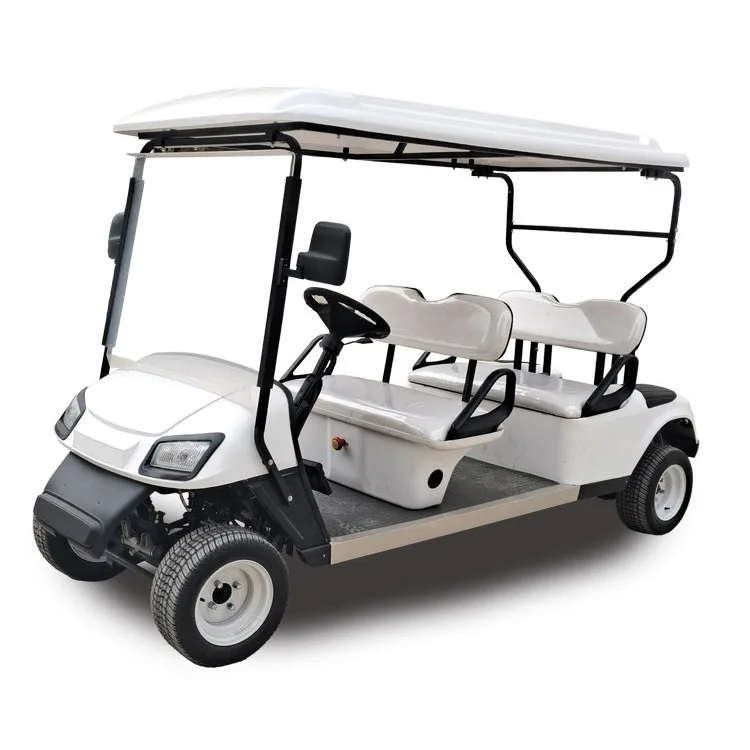
In 2025, golf carts are no longer just for the golf course. Instead, they are driven as low-speed vehicles (LSVs) for travel to and from urban and suburban areas. Getting to and from gated communities to promenades and even university campuses is now more efficient.
Golf Carts are universal for residents.
They are streamlined to help parents to pickle children from playdates. For seniors, they make grocery shopping more manageable. Turning vehicles off incentivizes quieter and safer neighborhoods.
Coastal towns in Florida and Bali have integrated golf carts for tourists. These regions are now more accessible for boardwalks, cafes, and scenic viewpoints. Merchants can now gain easy access to tourists. The calm flow of golf carts gives respite from the din of vehicles, allowing people to enjoy the serene beaches.
Golf carts have also been incorporated into university campuses.
Students and professors can be more efficient with their time as they can seamlessly attend their meetings, classes, and even collect supplies. Larger campuses, like University of Texas and Singapore’s NUS, have app-based shared cart systems. This helps reduce car usage by 25% and helps ease congestion.
Having green credentials supports the goals of civic sustainability.
Helping cities with the carbon targets and air pollution creates a low emission transportation system. In addition to air quality, the city’s livability is enhanced as the noise pollution is reduces, allowing residents to engross themselves in peaceful outdoor spaces that are no longer tainted by engine noises. Residents are also able to sleep better.
There is a lower operating cost which creates greater incentive.
While small electric cars cost 8,000-15,000, golf carts are significantly cheaper. In addition to lower purchase price, golf carts have lower maintenance costs, which leads to lower repairs and cheaper insurance. The reduction in costs supports better community and household savings.
Basic operation like pedals and a forward/reverse switch streamline control which is important. With less than six feet in width, the small vehicles are able to manever through narrow streets and even historical areas that are limited to larger cars. This makes them perfect for older urban centers.
Expanding policy flexibility has more positive outcomes to the focus areas.
In the United States, 35 states permit the use of low speed vehicles (LSVs) on streets with 35 mph speed limits; Florida has the most developed infrastructure. Queensland and New South Wales Australia have similar policies, as do Singapore and Thailand in Southeast Asia, which allow carts in tourist and residential zones. Most require basic safety features like headlights and seatbelts.
Cities also improve infrastructure by building dedicated LSV lanes, charging stations at community centers, and redesigned traffic signals. There are also easily integrated low speed vehicle pathways in retirement communities as part of integrated seamless mobility networks.
Multi-modal transport systems in urban areas rely on LSVs for transborder gaps. Downtown, shared carts are used for grocery pickups by employees who take buses to the area. Students who bike to campus use carts to access far-distance classes. These systems ensure seamless auxiliary urban transport networks in metropolitan areas.
In 2025, we see how repurposed technology impacts us and, at the same time, proves to be a help for contemporary problems. These vehicles serve the same purpose as the buses and bicycles, and, unlike them, they are cheap, green, and accessible. All of this is aimed at reducing the traffic and pollution I the city. These simple carts are unpredicted saviors for intra city transport.
 Hot News
2025-09-30
2025-08-30
2025-07-28
2025-06-18
2025-05-20
2025-01-21
 EN
EN