
 EN
EN
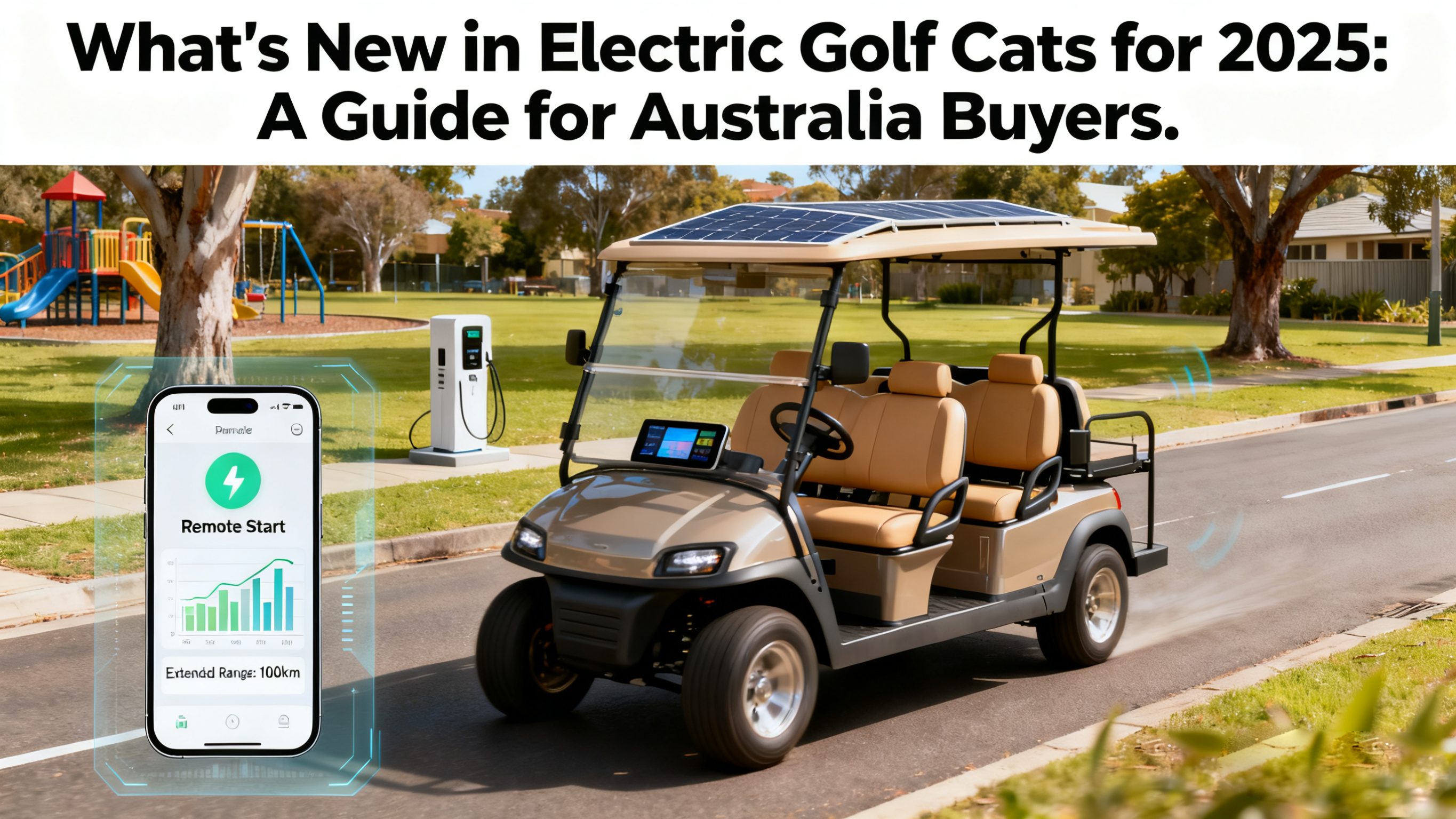
Electric Golf Cart 2024: Key Technological Innovations Reshaping the Australian Market
Australian golfers are embracing smarter, more efficient electric golf carts in 2024, driven by advancements that enhance both performance and usability. These innovations address the unique demands of local courses, from sprawling coastal resorts to hilly inland layouts.
GPS Integration and Smart Features Enhancing On Course Navigation
Electric golf carts these days come equipped with GPS tech that helps players find their way around courses more efficiently. According to a recent market study from Future Market Insights (2024), most Australian golf clubs are really into this stuff. The data shows about two thirds of them have made it a priority to get carts with those fancy course maps, which cuts down on how long rounds take by roughly 17 minutes. What makes these systems so useful is they can factor in current weather conditions and adjust distances based on slopes something that matters a lot along Australia's unpredictable coastlines where wind and terrain can change everything.
Smart Connectivity: App Based Controls and Real-Time Diagnostics
Golf cart operators are getting smarter these days thanks to mobile apps that let them check battery status, lock/unlock vehicles remotely, and tweak speed controls from their phones. The best part? These apps come with real time warnings when something needs fixing like worn brakes or motors running too hot, which is actually pretty important down south where the sun beats down hard all day long. Hooking everything up to clubhouse management systems means each cart leaves behind a trail of usage information that helps managers keep track of what's going on across the entire fleet. Resorts that tried this out first saw around a 20% drop in equipment sitting idle waiting for repairs, though results do vary depending on how well staff actually pay attention to those alerts.
Battery Technology and Range: Powering Through 36 Holes in Australian Conditions
Lithium-Ion vs. Lead-Acid: Performance, Charging, and Longevity Compared
Most 2024 electric golf carts come equipped with lithium ion batteries these days. They weigh about half as much as traditional lead acid options and last way longer between charges too. The numbers tell the story pretty clearly actually. Lithium packs can handle around three thousand charge cycles before needing replacement, which is roughly double what lead acid manages. Down under in Australia where temperatures get quite hot, lithium batteries charge nearly twice as fast as their older counterparts. Full charge takes just four hours instead of twelve for lead acid. Even when things heat up to forty degrees Celsius, lithium maintains almost all its power output at 95%, whereas lead acid loses about thirty percent of its capacity in the same heat. Sure, the upfront price tag for lithium is about two and a half times what lead acid costs. But considering they typically last eight to ten years versus only three or four for lead acid, most users find that the extra investment pays off pretty quickly. Within eighteen months of regular use, the savings from not having to replace batteries so often usually makes up for the initial difference.
Maximizing Battery Life in High UV and Coastal Environments
To combat degradation, Australian operators use adaptive strategies:
- UV Protection: 70% of lithium models feature ceramic-coated casings, reducing internal heat by 18°C during peak sun
- Corrosion Resistance: Monthly application of marine-grade dielectric grease to terminals reduces salt-air damage by 73%
- Partial Cycling: Keeping lithium charge between 20–80% in coastal areas extends lifespan by 39% versus full discharges
Smart charging systems adjust voltage based on ambient temperature, cutting seasonal capacity swings by 54% in Queensland trials.
Performance and Durability: Built for Australia's Diverse Terrains and Climate
Motor Power and Torque Optimized for Hills, Sand, and Rough Ground
2024 electric golf carts deliver 20–30 Nm of torque to handle steep inclines and loose surfaces common across Australian courses. Brushless motors have replaced brushed designs, offering 15% greater efficiency on sandy terrain. Adaptive algorithms modulate power delivery using gradient sensors, enabling smooth climbs without excessive battery drain.
All-Terrain Tires, Suspension Upgrades, and Weather-Resistant Construction
Manufacturers now equip carts with 10-inch all-terrain tires and dual-stage suspension, absorbing impacts from rocks and potholes while maintaining stability at 25 km/h. Key enhancements include:
- Triple-layer rubber compounds resistant to punctures from spinifex grasses
- Galvanized steel frames coated with salt-mist-resistant polymers (tested to AS/NZS 2312:2014 standards)
- Waterproof bearing hubs rated IP67 for creek crossings
UV-Stabilized Components and Sealed Electrical Systems for Extended Lifespan
With UV radiation degrading conventional plastics 2.3x faster in Australia (BOM 2023 Climate Report), 2024 models incorporate:
- Polycarbonate panels with UV60 inhibitors
- Silicone-gasket-sealed controller modules
- Anti-corrosion terminals on 48V battery arrays
These upgrades reduce maintenance intervals by 40% compared to 2020-era models, especially in coastal environments.
Top Brands, Pricing, and Regulatory Compliance in Australia for 2024
Electric golf carts from 2024 are becoming increasingly popular at country clubs and neighborhood courses everywhere. Golfers shopping around need to weigh several factors these days including how reputable the brand is, what fits their wallet, and whether the cart meets local regulations. At the high end, companies such as Motocaddy and Powakaddy stand out because they offer those 5 year warranties plus IP67 waterproof ratings which means they can handle pretty much anything Mother Nature throws at them. For folks watching their spending though, Stewart Golf has something special going on with their modular battery setup. According to recent numbers from the Golf Industry Report, this design actually saves owners about 18 percent over time when it comes to maintenance expenses.
Entry-level carts offer 60–80 km ranges suitable for most club settings at $8,500–$11,000 AUD. However, operators in salt-heavy regions like Queensland should invest in premium models with marine-grade corrosion protection—a $2,400 premium that significantly extends service life.
Regulations vary nationally: New South Wales mandates 25 km/h speed governors and turn signals, while Western Australia permits 32 km/h operation on private land. Updated AS/NZS 1593:2024 safety protocols require all carts sold after July 2024 to include automatic hill-descent control, now standard in 78% of current models.
Sustainability and Market Trends: The Rise of Electric Golf Carts in Australia
Growing Demand for Electric Golf Cart 2024 Models in Clubs and Communities
The uptake of electric golf carts in 2024 is really picking up steam, with market analysts predicting around 7.8% growth each year until 2031. People aren't just using them on golf courses anymore either. These little electric vehicles have become popular for shuttling guests around resorts, helping seniors get around retirement communities, and even managing equipment at events. The trend shows how folks are starting to see electric carts not just as golf toys but as green replacements for those old gas guzzlers that pollute everywhere. Manufacturers tell us about 4 out of every 10 orders they're getting this year actually come from outside the golf world. Coastal resorts especially love them because their sealed electrical systems stand up better against the salty air that would eat away at regular components over time.
Environmental and Economic Benefits of Electrification on Australian Courses
Going electric cuts down around 2 to 3 tons of CO2 each year for every golf cart when compared to traditional gas powered ones, as shown by research from the Clean Transport Study in 2023. Golf clubs are seeing real money savings too, with maintenance expenses dropping by about 60 percent and energy consumption going down roughly 35 percent thanks to those new solar friendly lithium ion battery packs. The Australian government is helping out with their Sustainable Tourism Initiative offering cash back incentives of up to two grand per cart. Most operators, about 78 percent according to recent 2024 data collection efforts, say they get their investment back within just three years after making the switch.
FAQs
1. What are the major technological innovations in electric golf carts for 2024?
Major innovations include GPS integration, app-based controls for real-time diagnostics, advanced lithium-ion battery technology, and UV-stabilized components for increased performance and durability.
2. How do lithium-ion batteries compare to lead-acid batteries?
Lithium-ion batteries last longer, charge faster, and maintain power output even in high temperatures, making them a better option compared to lead-acid batteries.
3. What are the advantages of electric golf carts over traditional gas-powered ones?
Electric golf carts are environmentally friendly, reduce CO2 emissions, and lead to significant energy and maintenance cost savings.
4. What are the typical price ranges for 2024 models?
Entry-level models range from $8,500-$11,000 AUD, while premium models with advanced features may require additional investment.
Table of Contents
- Electric Golf Cart 2024: Key Technological Innovations Reshaping the Australian Market
- Battery Technology and Range: Powering Through 36 Holes in Australian Conditions
- Performance and Durability: Built for Australia's Diverse Terrains and Climate
- Top Brands, Pricing, and Regulatory Compliance in Australia for 2024
- Sustainability and Market Trends: The Rise of Electric Golf Carts in Australia
- FAQs