
 EN
EN
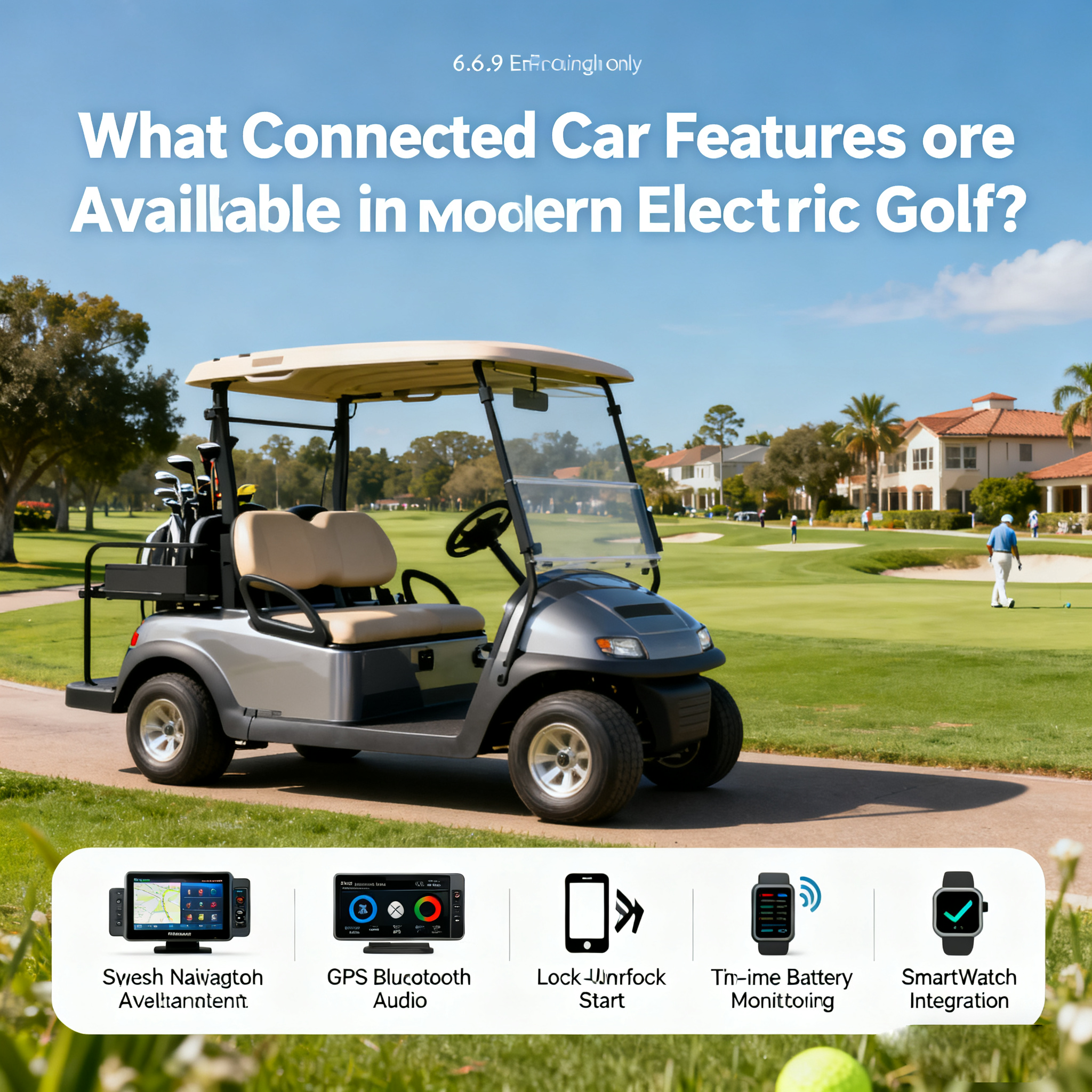
Connected Car Technology in Electric Golf Carts: An Overview
The Evolution of Connected Car Features in Electric Golf Carts
Electric golf carts these days aren't just simple transport anymore but have become pretty smart mobility solutions thanks to connected tech. Back in the day, they mainly monitored batteries and that was about it. Now we see them packed with IoT sensors, cloud computing stuff, and software updates that come down automatically. The same kind of connectivity found in high-end cars is now showing up in these carts too. Think about GPS navigation that finds the best routes, keeps tabs on energy usage, and even schedules maintenance by itself. Because of all this tech, smart golf carts make sense not just on golf courses but also at resorts, college campuses, and even in city neighborhoods where people need short-distance transportation options.
How IoT Is Transforming Traditional Golf Cart Functionality
The Internet of Things is changing how golf carts run in both fun places and business environments. With real-time checks on battery status, these smart systems stop surprises when carts suddenly die. Some advanced setups can actually spot signs that motors might fail anywhere from 8 to 12 weeks ahead of time. For companies managing large fleets, special dashboards let them keep tabs on where each cart is, how much they're being used, and whether batteries charge properly. According to research from the Ponemon Institute back in 2023, this kind of tracking cuts down operating expenses around 22%. And there's another perk too – remote diagnostics mean techs can figure out about 73% of regular electrical problems just by looking at data from afar, so nobody has to drive all over town for simple fixes anymore.
This transformation is driven by collaboration between automotive engineers and software developers, ensuring compatibility with smartphones and enterprise management tools. The convergence of mobility and digital infrastructure positions connected electric golf carts as scalable solutions for smart environments.
Smartphone Integration and Real Time Vehicle Monitoring
Today's electric golf carts utilize connected car technology to deliver smartphone-driven functionality comparable to traditional automotive systems. Leading manufacturers offer mobile apps that provide granular control and monitoring—especially beneficial for fleet managers and frequent users.
Mobile App Integration for Battery Monitoring and Charging Alerts
Mobile apps deliver real-time insights into battery health via intuitive dashboards, alerting users when charge drops below 20%, a threshold critical for preserving lithium-ion lifespan. By analyzing usage, temperature, and terrain data, these systems recommend personalized charging schedules, cutting energy waste by up to 15% (EV Fleet Trends 2023).
Usage Tracking Through Smartphone Connected Dashboards
Owners can access historical data on routes, speed profiles, and energy consumption through unified dashboards. Resort operators leverage this information to optimize cart deployment during peak hours, reducing idle time by 25% in gated communities according to hospitality industry reports.
Remote Vehicle Management via Dedicated Golf Cart Apps
Geofencing allows owners to restrict operation within designated zones—such as resort boundaries—and remotely disable motors if theft is suspected. Some models support over-the-air updates to improve torque delivery or regenerative braking performance without requiring dealership visits.
Case Study: Operational Impact of Smart Connectivity Platforms
A leading manufacturer’s connectivity platform demonstrated significant improvements:
- 38% faster response to mechanical faults via app-reported diagnostics
- 72% user adoption rate for automated maintenance scheduling
- 41% reduction in unauthorized usage incidents using geofencing alerts
This fusion of IoT and consumer-friendly interfaces bridges recreational vehicles with enterprise-grade telematics, setting new standards for engagement in low-speed EVs.
GPS, Geofencing, and Fleet Management for Operational Efficiency
Connected electric golf carts are streamlining operations in resorts, campuses, and hospitality venues. GPS navigation provides real-time route tracking, enabling dynamic rerouting that reduced average trip times by 12% in resorts (2024 fleet management study).
Geofencing to Restrict Unauthorized Usage and Enhance Security
Geofencing establishes virtual boundaries that trigger alerts when carts leave authorized areas. Hospitality providers report a 25% drop in unauthorized use since adopting these geofencing systems, with notifications sent directly to security teams via mobile apps—protecting assets while maintaining guest access.
Operational Analytics for Large-Scale Fleet Operators
Fleet managers analyze IoT-collected data on:
- Battery consumption
- Peak usage periods
- Maintenance cycles
These insights help reduce annual operating costs by 18% for enterprises managing 50+ carts, based on 2023 telematics research.
Trend: Adoption of Centralized Fleet Management Systems by Hospitality Providers
Major resorts now favor integrated platforms combining GPS, energy monitoring, and reservation systems. The global fleet management market is projected to grow by $52.23 billion by 2029, fueled by the hospitality sector’s need to balance service quality with cost control. Real-time dashboards enable demand-based vehicle allocation and driver behavior monitoring.
Remote Diagnostics and Predictive Maintenance Solutions
App-Based Diagnostics and Early Fault Detection in Electric Drivetrains
IoT sensors continuously monitor motor performance, battery status, and component wear. They detect anomalies such as voltage irregularities or bearing degradation early, allowing maintenance teams to resolve 73% of potential failures during scheduled downtime (FleetNet America 2023).
Predictive Maintenance Alerts Reducing Downtime
Automated alerts for brake wear, battery decline, and connectivity issues minimize unplanned outages. Predictive algorithms tailor service intervals to actual usage, cutting maintenance costs by up to 22% compared to fixed schedules. A 2023 study of remote diagnostics tools found resorts achieved 40% faster repair turnarounds during high-demand seasons.
Data-Driven Reliability Improvements
Among 500+ electric utility vehicles studied, models with remote monitoring required 30% fewer service calls. Operators using app-based diagnostics also reported 15% longer battery lifespans due to optimized charging and thermal management—key advantages in high-utilization environments like golf courses and corporate campuses.
Enhanced Security and Future Trends in Connected Golf Carts
GPS tracking and motion-activated alarms for theft prevention
Modern carts feature GPS tracking combined with motion sensors that send instant alerts upon unauthorized movement. This dual-layer security enables real-time location tracking through mobile dashboards. According to the 2024 Connected Vehicle Security Report, facilities using these systems recover stolen carts 60% faster than those relying on non-connected models.
Remote immobilization using mobile app commands
Operators can instantly disable engines via smartphone apps, rendering stolen carts inoperable. This capability is vital for hospitality properties, where rapid intervention stops carts from exiting premises undetected.
Key-based security and access control in shared-use models
Digital key systems replace physical locks, offering time-limited access codes for guests or staff. Resorts using this technology have reduced unauthorized usage by 45% through automated permission expirations and detailed activity logs.
Future trends: AI-driven energy management and cross-brand compatibility
Emerging AI systems analyze driving habits to optimize power usage, potentially extending range by 20% during peak hours. At the same time, industry groups are developing universal communication protocols to ensure interoperability between different manufacturers’ charging networks and monitoring platforms.
Industry challenge: Balancing advanced tech with simplicity for aging users
While 78% of retirement communities seek advanced security features, 62% of residents over 65 find complex app interfaces challenging (MobilityTech Insights 2023). In response, manufacturers are introducing hybrid control panels that combine touchscreens with physical emergency buttons, ensuring accessibility without sacrificing functionality.
FAQ
What are the key connected car features in modern electric golf carts?
Modern electric golf carts boast IoT sensor technology, GPS navigation, and automatic software updates, bringing them closer to high-end vehicle connectivity.
How does IoT improve golf cart functionality?
IoT technology enhances golf cart functionality by providing real-time battery monitoring and diagnostics, predicting motor failures before they occur, and reducing operating expenses.
How do smartphone apps integrate with electric golf carts?
Smartphone apps offer granular monitoring and control over golf carts, providing features such as battery health alerts, route tracking, and geofencing. They can remotely manage carts and receive updates without visiting dealerships.
What benefits do GPS and geofencing offer to golf cart fleets?
GPS and geofencing improve operational efficiency by providing real-time tracking. They establish security boundaries that reduce unauthorized usage and enable quicker theft recovery.
Table of Contents
- Connected Car Technology in Electric Golf Carts: An Overview
- Smartphone Integration and Real Time Vehicle Monitoring
- GPS, Geofencing, and Fleet Management for Operational Efficiency
- Remote Diagnostics and Predictive Maintenance Solutions
-
Enhanced Security and Future Trends in Connected Golf Carts
- GPS tracking and motion-activated alarms for theft prevention
- Remote immobilization using mobile app commands
- Key-based security and access control in shared-use models
- Future trends: AI-driven energy management and cross-brand compatibility
- Industry challenge: Balancing advanced tech with simplicity for aging users
- FAQ